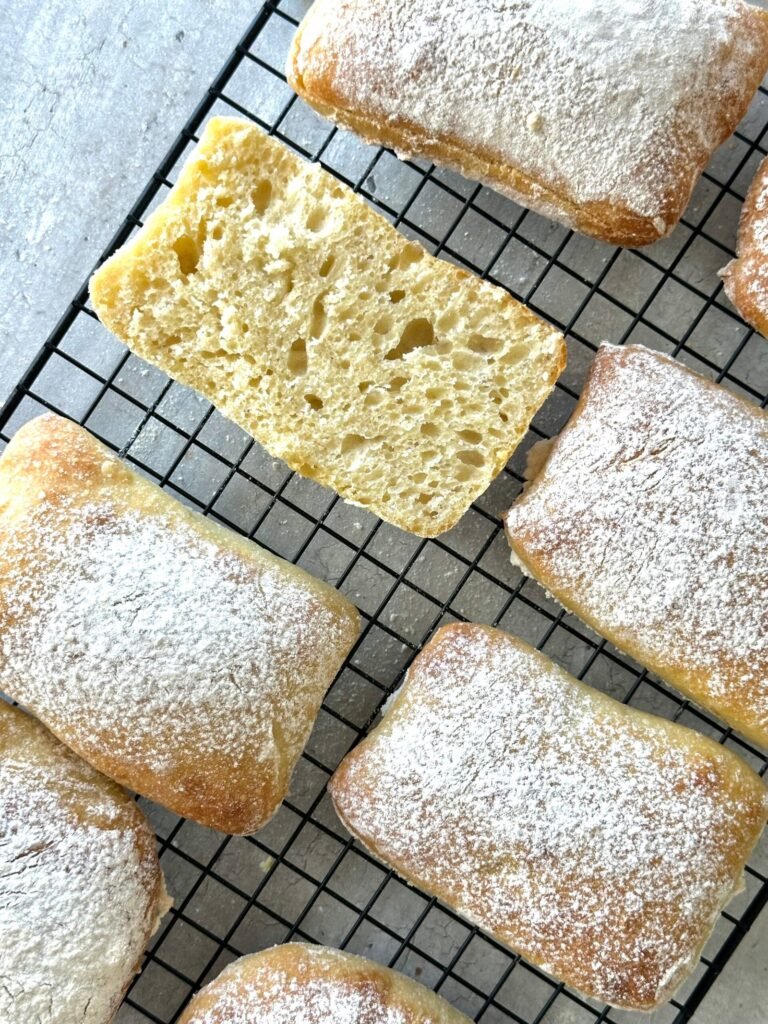
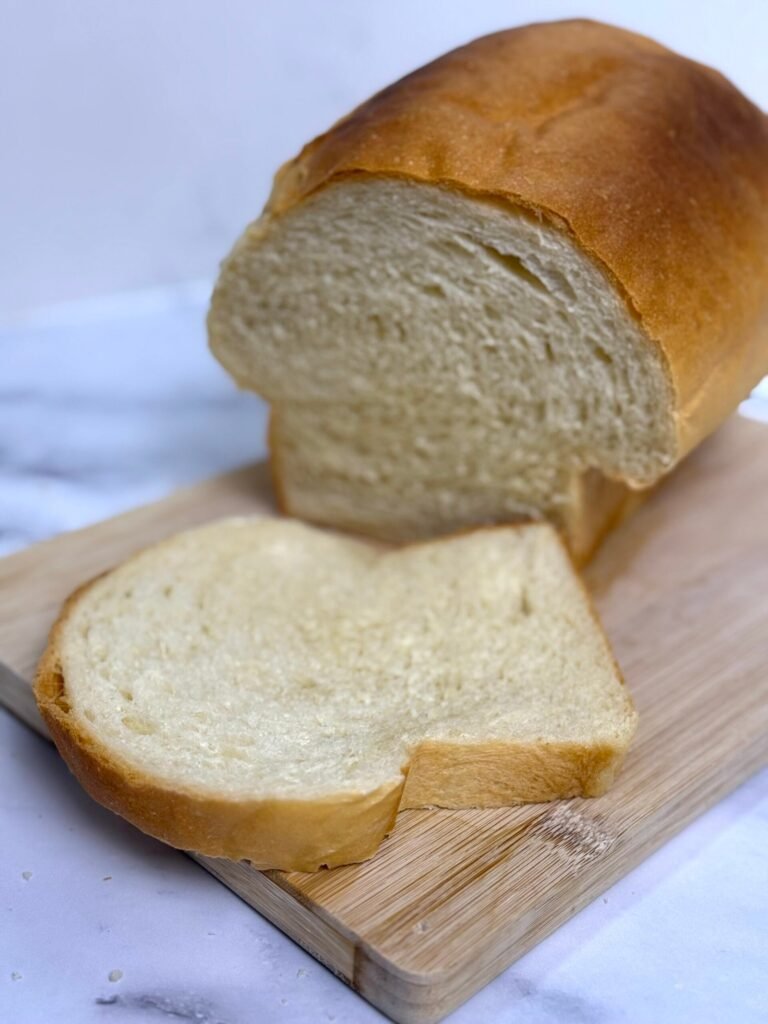
I love sourdough bread. I don’t always love feeding a starter. That’s why I make this sourdough bread without starter (well, sourdough-style).
This loaf is my shortcut. It looks and feels like classic sourdough, but there’s no starter to grow.
The secret is a poolish: a simple mix of flour, water, and a pinch of yeast that sits overnight. It gives the bread deep flavor, a crisp crust, and an airy crumb.
It’s not real sourdough, and I won’t pretend it is. But it’s the closest you’ll get with this little effort.
Start the day before. The poolish needs a few hours on the counter and a night in the fridge.
This sourdough bread without starter (a sourdough-style poolish bread) starts with a preferment of bread flour, water, and a little yeast, left 3–4 hours at room temperature and then 8–12 hours in the fridge. Mix it into the final dough with more flour, water, yeast, and salt, knead, rise with folds, shape, and rise again. Bake with steam at 450°F (230°C) for 20 minutes, then at 400°F (200°C) for 20–25 minutes.

Sourdough-Style Bread with Poolish (No Starter Needed)
Ingredients
Method
- In a bowl, mix all the poolish ingredients until smooth.
- Cover with plastic wrap and leave at room temperature for 3–4 hours.
- Move to the fridge for 8–12 hours (overnight).
- In the morning, take it out and let the poolish rest for 1 hour at room temperature before using.
- Autolyse: in a large bowl, mix the flour and water for the final dough. Cover and let sit for 30–40 minutes.
- Add the poolish, yeast, and salt. Knead for about 10 minutes, until the dough is elastic and even.
- Cover and let rise for 1–1½ hours. During the rise, do 2–3 sets of folds, every 30 minutes, with wet hands.
- Turn the dough out and gently flatten it. Shape it into a loaf that fits your pan.
- Place it in a lightly greased or parchment-lined pan.
- Cover and let rise for 45–60 minutes, until almost doubled.
- Heat the oven to 450°F (230°C) and place a pan of boiling water on the bottom rack to create steam.
- If you like, dust the dough with a little flour and score it with a sharp knife.
- Bake for 20 minutes at 450°F (230°C). Lower the heat to 400°F (200°C) and bake another 20–25 minutes.
- The bread is ready when it’s golden and sounds hollow when you tap the bottom.
Notes
- Rise times may be shorter when your kitchen is very warm.
- The folds during the first rise build the dough’s structure and give it an airy texture.
- A light dusting of flour before baking gives a rustic look.
- Let the bread cool completely before slicing.
- Bread flour → all-purpose flour will work, but the crumb will be less open and chewy.
- Instant yeast → active dry yeast in the same small amounts.
Frequently asked questions
A poolish is a preferment: equal weights of flour and water with a tiny bit of yeast, left to ferment for hours before mixing the final dough. It adds flavor and helps create an open crumb.
No. It uses commercial yeast, not a sourdough starter. The long poolish gives it a deeper, more complex flavor that’s close to sourdough, with less tang.
The recipe calls for 3–4 hours at room temperature and then 8–12 hours in the fridge. That long, cold rest is where the flavor comes from, so it’s best not to skip it.
The steam keeps the crust soft for the first part of baking, so the loaf can rise fully. Then the crust turns crisp and golden.
Once cool, keep it cut side down on a board or in a paper bag for a day or two. For longer storage, slice and freeze.